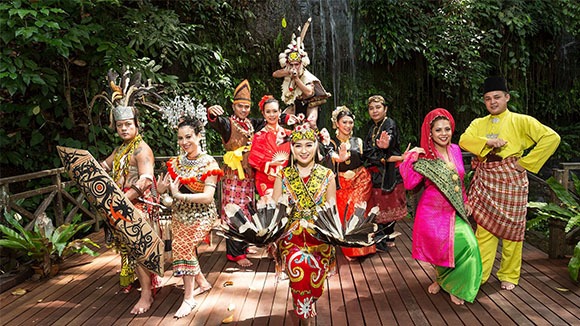
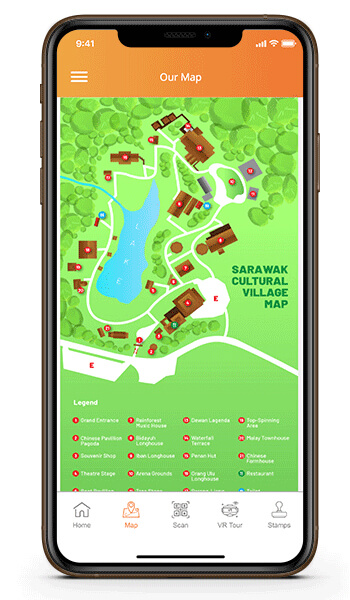
Sarawak Cultural Village is an award-winning Living Museum that spans across 17-acres of land just across from Damai Beach Resort and Hotels. Experience Sarawak in Half-a-day at Sarawak Cultural Village and learn about the local culture and lifestyles of the various ethnic groups in Sarawak.
Sarawak Cultural Village App
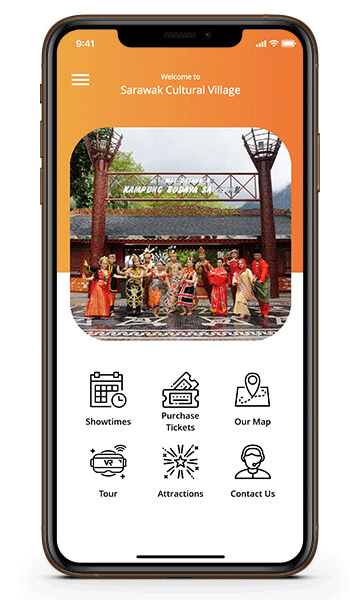
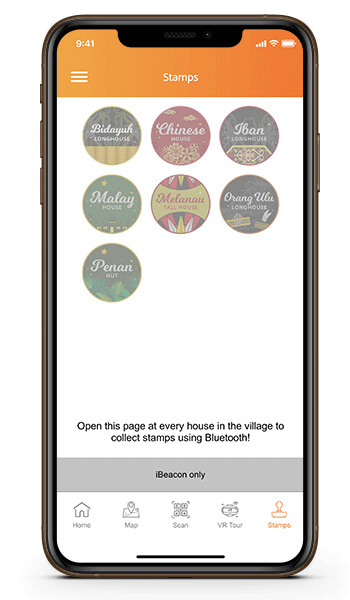
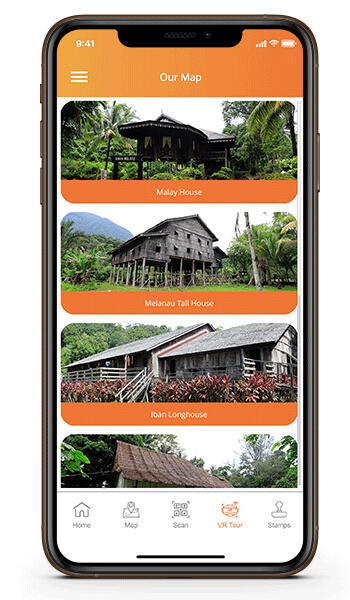
The App gives better experience to tourists exploring Sarawak Cultural Village by providing them with Virtual Tour experience and Treasure Hunt Game.
- Virtual tour of all Ethnic Houses
- Treasure hunt game for kids (Coming Soon In March)
- Stamps collection to enjoy discounts in the village
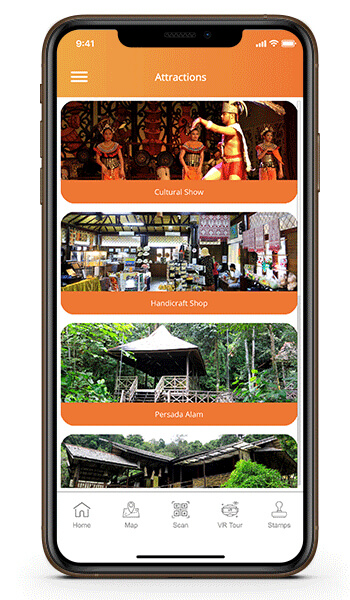
- Showtime schedules and Attraction Details
- Purchasing of Entrance Ticket(s)
Now you can download via Google Play Store and Apple Store.


ENTRANCE FEES
| 1 Day Validity | Adult | Child (2-12yrs) |
|---|---|---|
| Entrance (walk-in) | RM95.00 (Malaysian) RM155.00 (Non Malaysian) |
RM60.00 (Malaysian) RM95.00 (Non Malaysian) |
| Entrance Buy Online | RM90.00 (Malaysian) RM135.00 (Non Malaysian) |
RM57.00 (Malaysian) RM85.00 (Non Malaysian) |
| Entrance + Lunch Buy Online | RM125.00 (Malaysian) RM168.00 (Non Malaysian) |
RM88.00 (Malaysian) RM108.00 (Non Malaysian) |